События-конверсии
События-конверсии собирают данные о доходе пользователей в едином формате, чтобы вы могли использовать их для атрибуции, аналитики и сегментации.
Что такое события-конверсии
Anchor link toСобытия, связанные с доходом, редко бывают одинаковыми. Ваш SDK может вызывать PW_InAppPurchase, ваш бэкенд может отправлять кастомное событие OrderPlaced, а Stripe или Shopify доставляют свои собственные события-вебхуки. Без общего формата таргетинг или отчетность по доходу означают написание отдельной логики для каждого источника.
События-конверсии решают эту проблему, нормализуя все это в PW_Conversion — встроенное событие с фиксированным набором полей:
value: сумма транзакцииcurrency: код валюты по ISO 4217transaction_idиproduct_id: необязательные идентификаторы
PW_Conversion охватывает покупки, продления подписок и платежи со сторонних платформ, независимо от того, откуда исходит исходное событие, связанное с деньгами. Наряду с событиями по умолчанию и кастомными событиями, события-конверсии являются третьей категорией событий в Pushwoosh.
Как только доход поступает в виде PW_Conversion, RFM-сегментация, Customer Journeys, дашборды и ManyMoney AI считывают одни и те же нормализованные данные, независимо от того, какой источник их сгенерировал.
Как доход попадает в Pushwoosh
Anchor link toВы получаете запись PW_Conversion одним из трёх способов:
- Отправить его напрямую из вашего кода: ваше приложение или бэкенд отправляет
PW_Conversionпосле покупки. - Сопоставить существующее событие в Control Panel: укажите Pushwoosh на событие покупки, которое вы уже отправляете, и он будет генерировать записи
PW_Conversionбез изменения вашего кода. Вы можете сопоставить более одного исходного события для каждого приложения. - Отправить атрибуты
__amountи__currencyв любом событии: если событие, которое вы уже отправляете, содержит атрибуты__amountи__currency, Pushwoosh автоматически сопоставляет его сPW_Conversionпри первом поступлении — без какой-либо настройки в Control Panel.
Сценарии использования
Anchor link toПосле настройки событий-конверсий эти данные становятся доступными везде в Pushwoosh, где важен доход:
- Создавайте RFM-сегменты для ценных пользователей на основе суммы и давности трат, без кастомной логики для каждого события.
- Установите
PW_Conversionв качестве цели конверсии (Conversion Goal) в Customer Journey, чтобы видеть, какие сценарии действительно приводят к покупкам, а не просто к кликам или открытиям. - Просматривайте доход в дашбордах и отчетах без создания кастомной логики для каждого события покупки.
- Объединяйте доход от событий покупки из SDK и вебхуков платежных систем (Stripe, Shopify) в один набор данных вместо отдельного анализа каждого источника.
- Позвольте ManyMoney AI использовать реальные данные о транзакциях в своих рекомендациях и оптимизациях кампаний.
Как настроить события-конверсии
Anchor link toСобытия-конверсии настраиваются для каждого приложения. Вы можете настроить события-конверсии одним из двух способов. Следуйте инструкциям для того способа, который подходит для вашей реализации.
Отправка PW_Conversion из вашего кода
Anchor link toЭтот способ подходит, когда вы можете добавить или изменить код события в вашем приложении или на бэкенде. После каждой покупки отправляйте PW_Conversion через метод postEvent.
- Перейдите в Audience > Events. Найдите карточку Conversion events tracking.

- Нажмите View code.

- Скопируйте пример и добавьте вызов
postEventв то место вашего приложения или бэкенда, где завершается покупка.
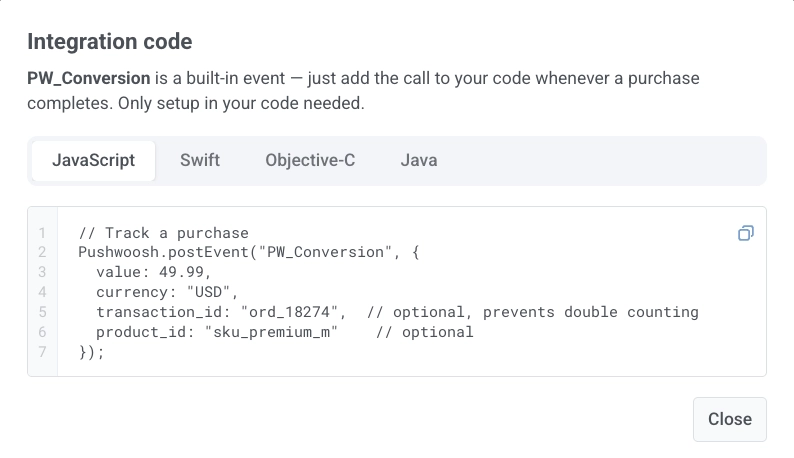
Пример для JavaScript:
Pushwoosh.postEvent("PW_Conversion", { value: 49.99, currency: "USD", transaction_id: "ord_18274", product_id: "sku_premium_m"});Атрибуты для вызова postEvent
Anchor link toВ следующей таблице перечислены атрибуты, которые вы можете передать при отправке PW_Conversion.
| Поле | Тип | Обязательно | Описание |
|---|---|---|---|
value | number | Да | Денежная сумма транзакции. |
currency | string (ISO 4217) | Да | Код валюты транзакции, например USD или EUR. |
transaction_id | string | Нет | Уникальный идентификатор транзакции. Рекомендуется для вашего собственного учета. Pushwoosh сохраняет его как есть, но не использует для дедупликации дохода. |
product_id | string | Нет | Идентификатор купленного продукта или тарифа. |
Сопоставление существующего события для отслеживания дохода
Anchor link toЭтот способ подходит, когда данные о покупках уже проходят через другое событие, и вы не хотите изменять свой код. Когда поступает сопоставленное исходное событие, Pushwoosh вызывает и записывает его как событие PW_Conversion.
-
Перейдите в Audience > Events. Найдите карточку Conversion events tracking.
-
Нажмите Start collecting revenue (или Event mapping, если вы уже сопоставили событие). Откроется страница Set conversion events.

- В разделе Use existing events to track conversion откройте выпадающий список EVENT и выберите событие, которое вы уже отправляете. Список включает кастомные события, события по умолчанию и события входящих вебхуков (например, Stripe или Shopify).
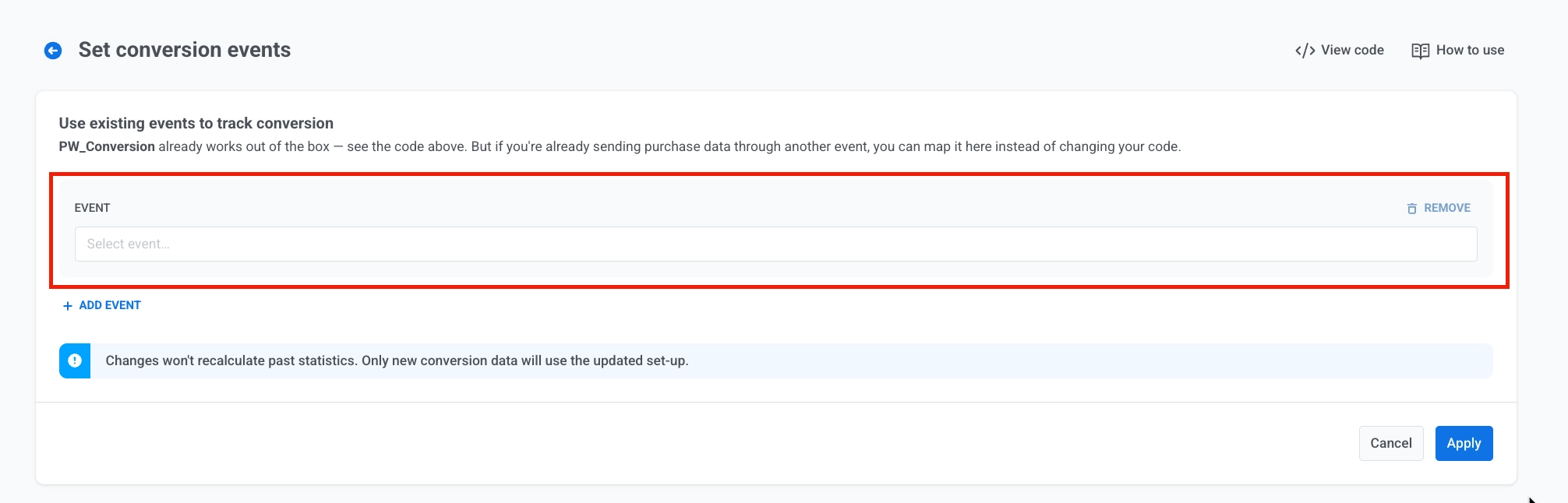
-
Сопоставьте остальные атрибуты:
- В PRICE выберите атрибут, в котором хранится сумма транзакции.
- В CURRENCY выберите атрибут, в котором хранится код валюты.
- При необходимости сопоставьте TRANSACTION ID (OPTIONAL) и PRODUCT ID (OPTIONAL).
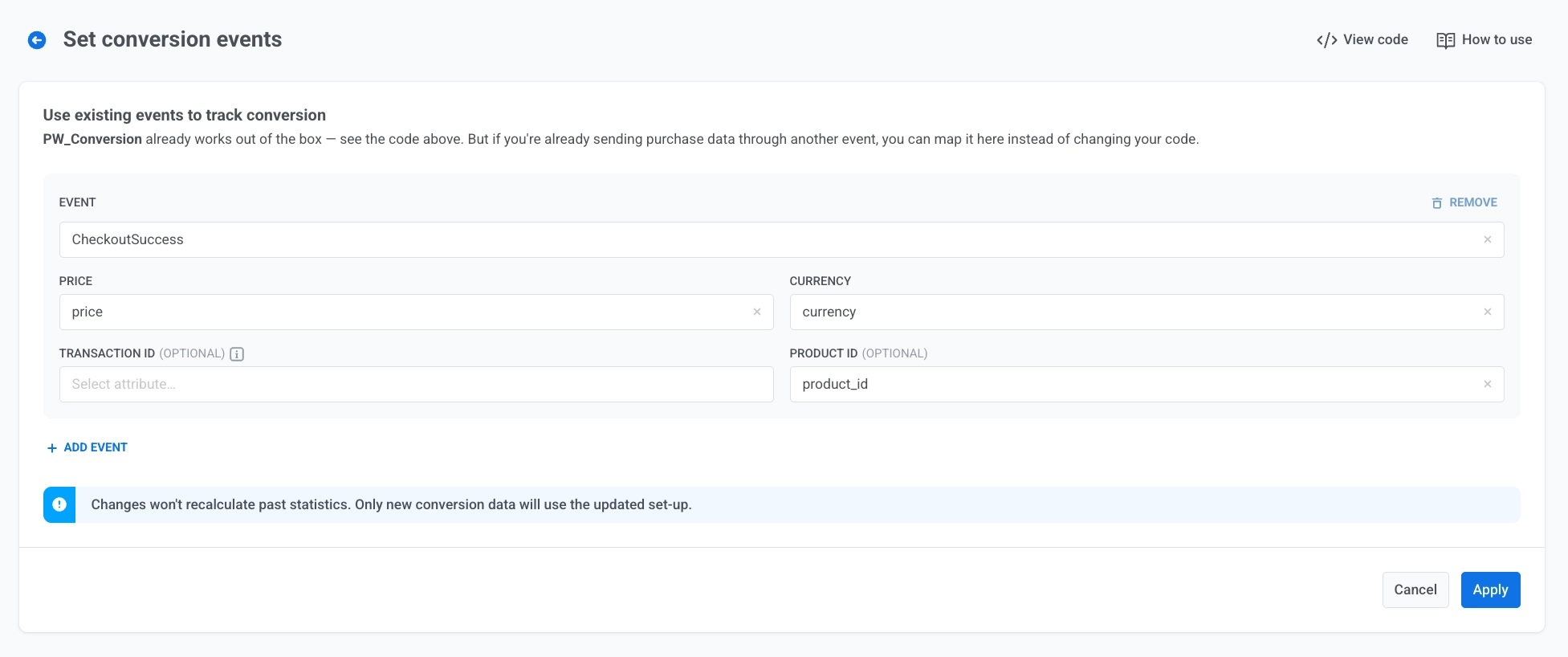
Чтобы сопоставить другое исходное событие, нажмите + ADD EVENT. Чтобы удалить сопоставление, нажмите REMOVE.
- Нажмите Apply.
Вы можете сопоставить несколько событий в качестве источников для одного и того же приложения. Например, сопоставить кастомное событие purchase_completed вместе с событием вебхука Stripe.
Мониторинг событий-конверсий
Anchor link toКарточка Conversion events tracking на странице Audience > Events суммирует активность по конверсиям для выбранного приложения. Она показывает два числа:
- Mapped events: сколько исходных событий в настоящее время передают данные в
PW_Conversion. - Triggered last 7 days: общее количество событий
PW_Conversion, вызванных за этот период, из любого текущего или прошлого сопоставления, или из прямых вызововpostEvent.
Нажмите View code, чтобы снова открыть пример интеграции PW_Conversion.
