Dynamic content
What is Dynamic content
Anchor link toThis functionality allows you to personalize your push messages and emails by modifying the message content with corresponding Tag values that you collect from your users. You can address your user by name and use any of their preferences in the message to make it relevant for every single user.
Use case
Anchor link toPicture this: the application provides coupons for best restaurants in town every Friday.
To draw users’ attention and bring them back to the app, you may send a basic push message that says “There are some coupons for you in the app, open it now!”. However, such a message doesn’t convey any specific information for a user, so it’s unlikely this push will be opened by everyone who receives it. To significantly increase the push open rate, notifications should be sent to the right audience with the right message. To send the most relevant messages, collect the following information from users by calling setTags:
- Name (sends Alias tag value to Pushwoosh)
- Favorite Restaurant (sends Restaurant tag value)
How to personalize a push
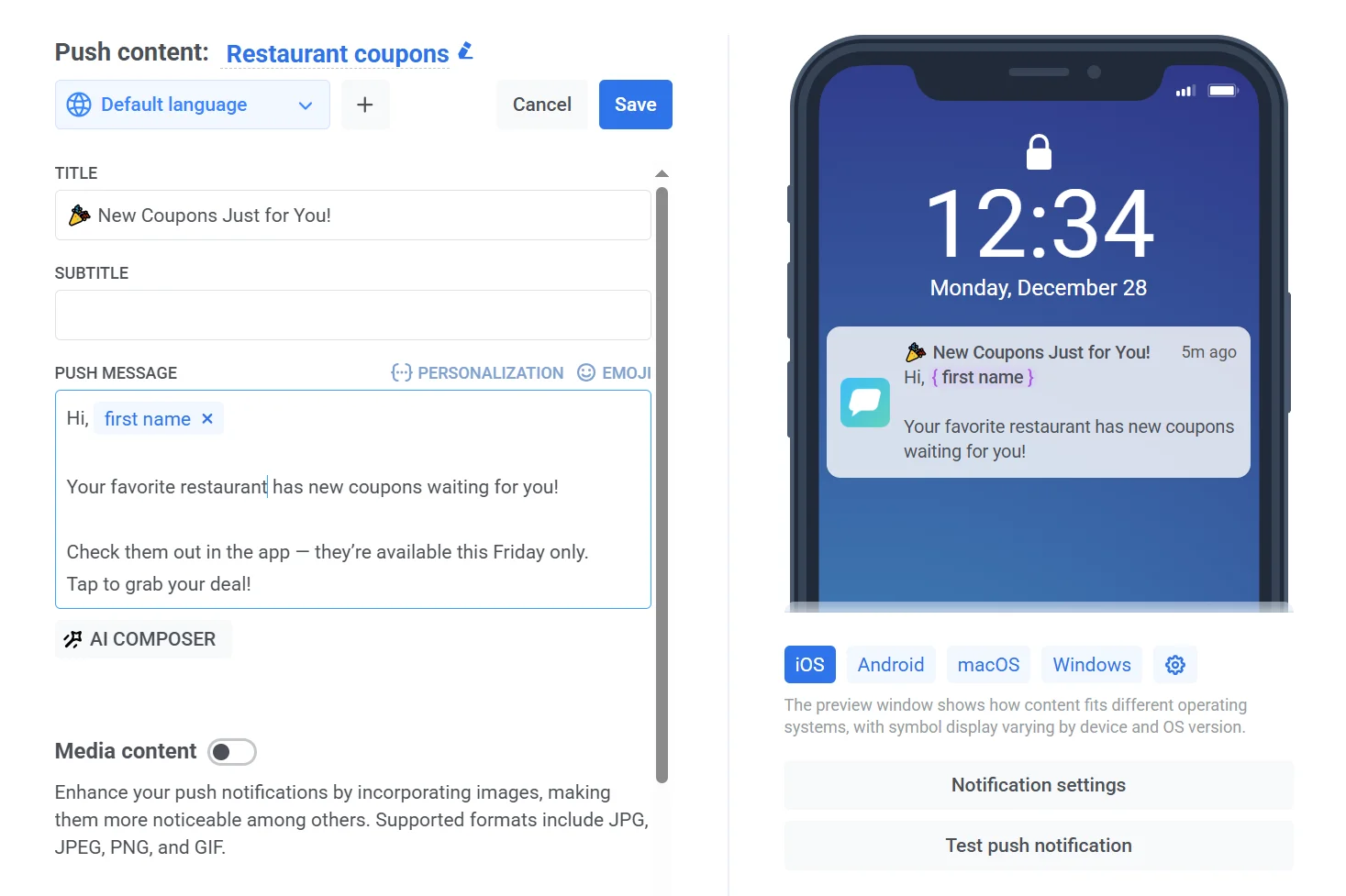
Anchor link toWith this info about users, you can personalize push messages by using Dynamic content. To add the Dynamic content to your message text, click the Personalization button on the top right of the input field.
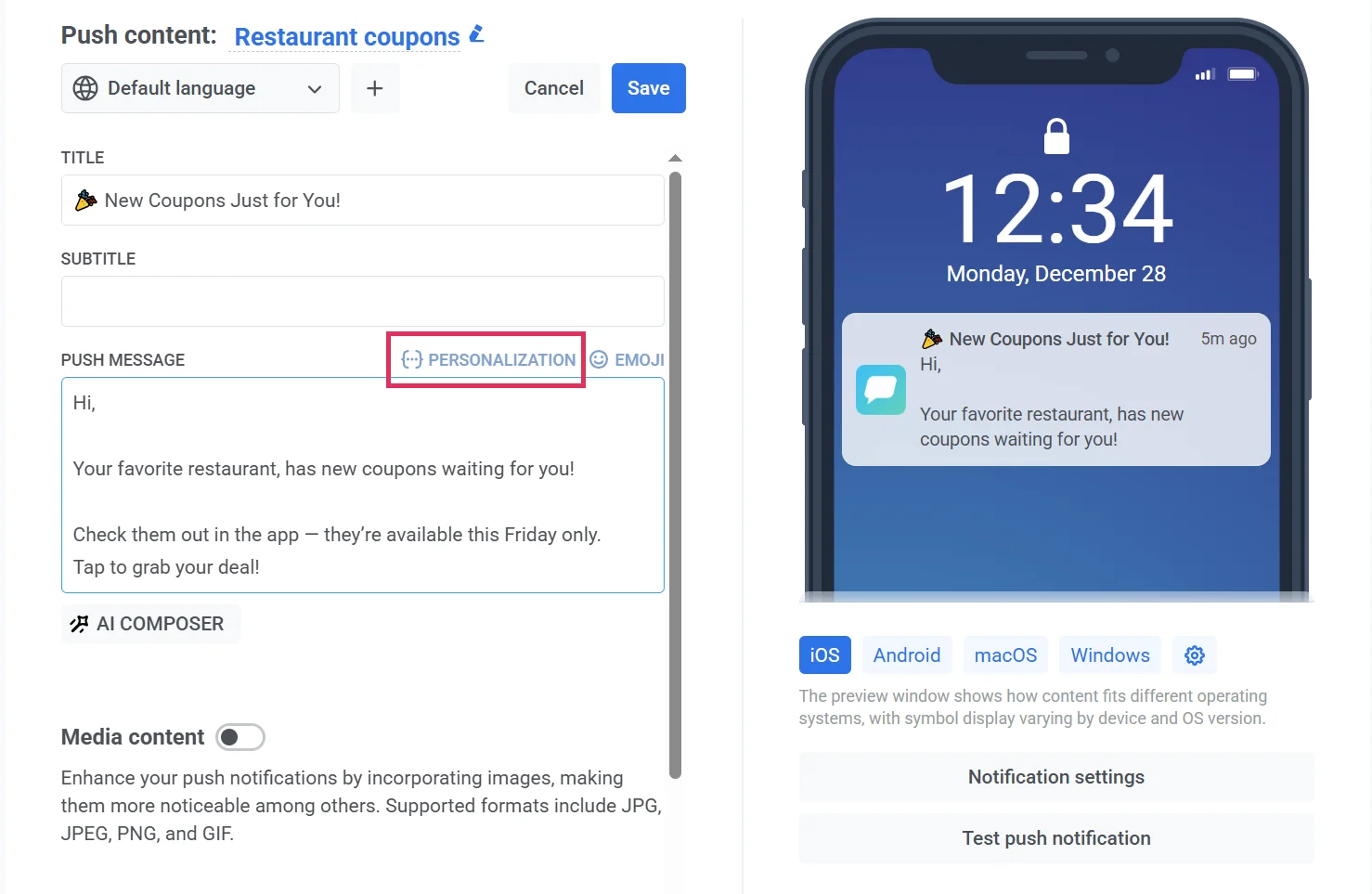
- Choose a Tag
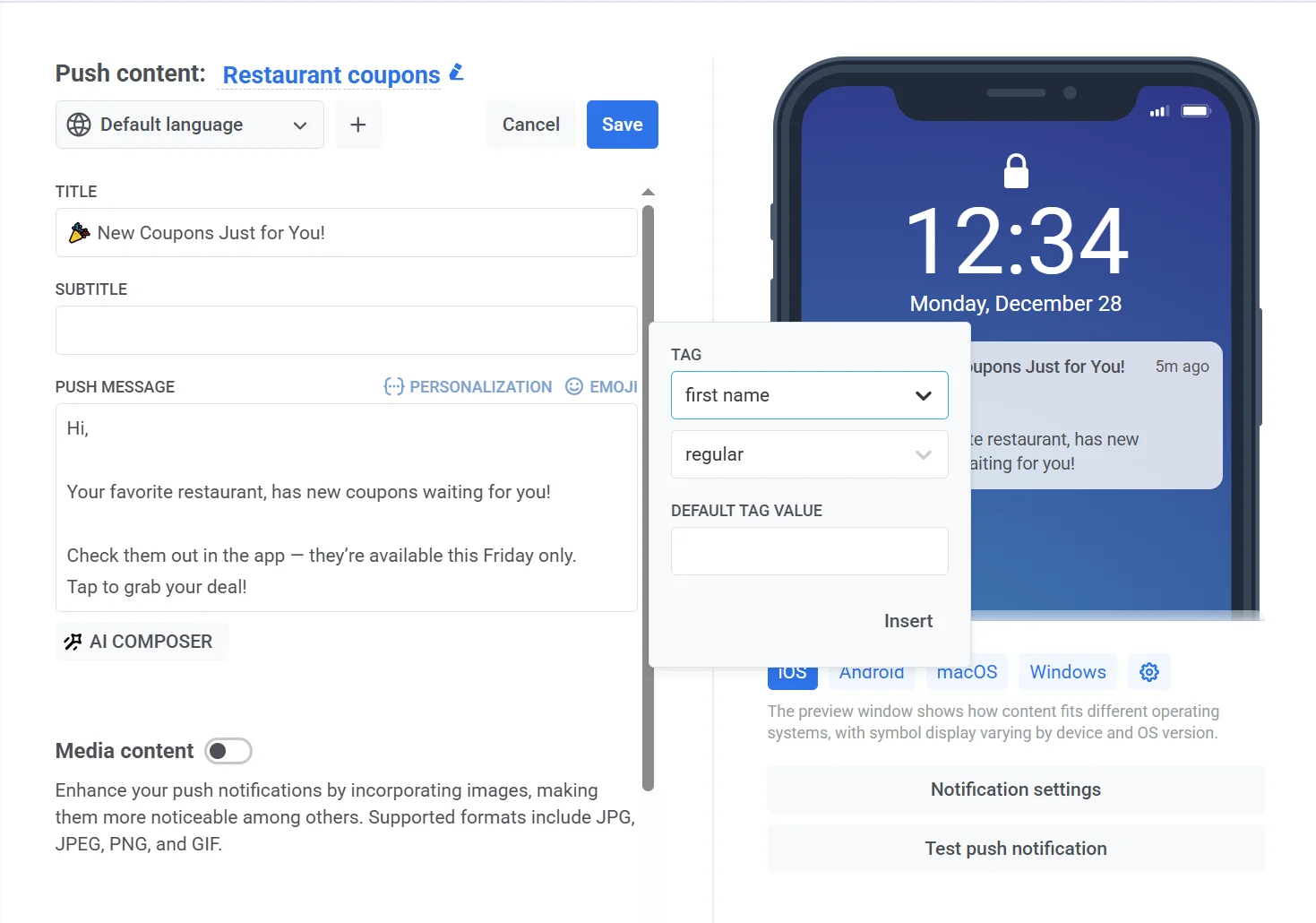
First, choose a Tag whose value will be used in the message. You can pick an existing Tag from the list, or type a name that isn’t a Tag in your account yet — for example, a placeholder for a Journey attribute you plan to add later. To apply, click Insert.
In our case, it’s the Name tag so that each user will receive a personalized push notification.
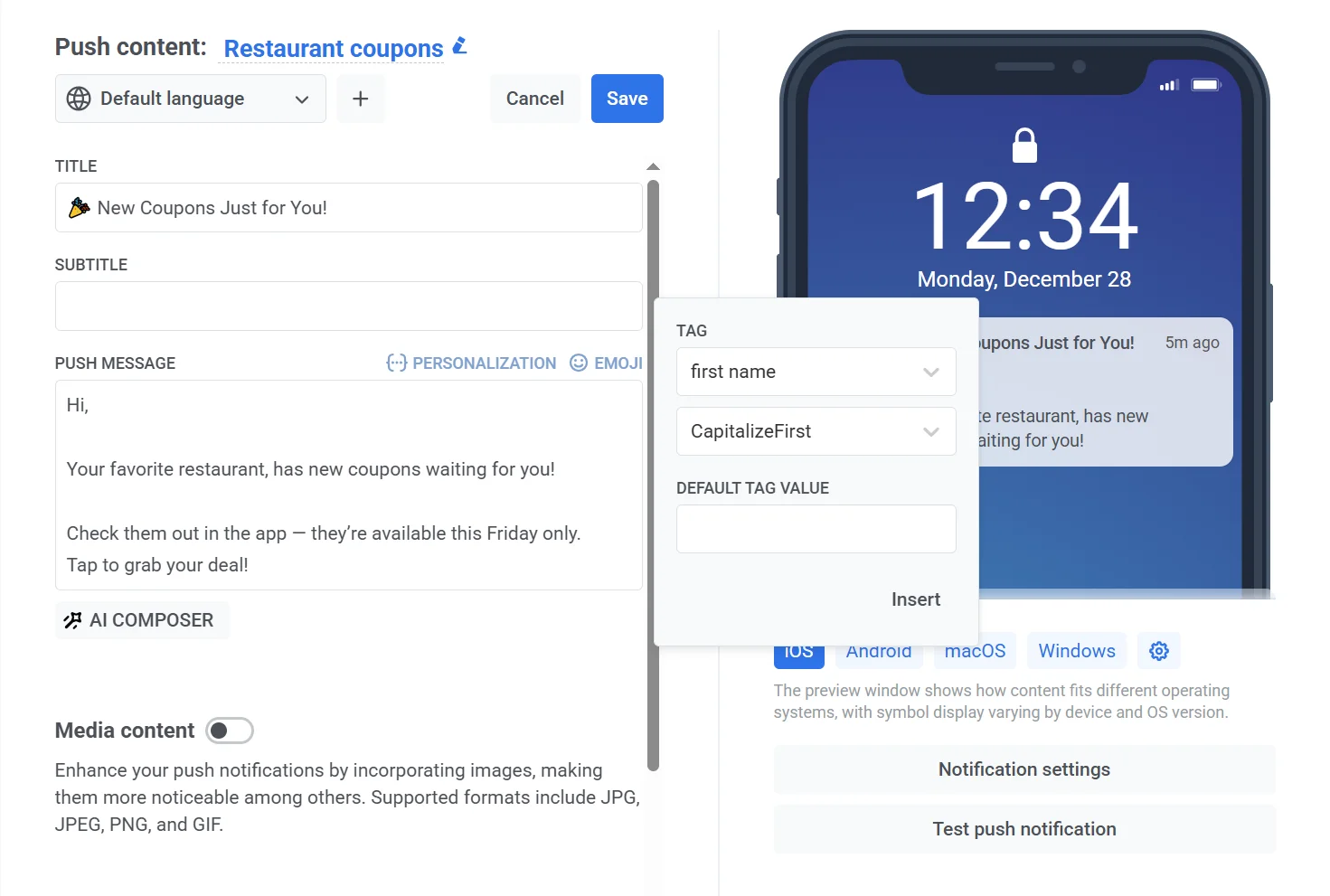
- Choose a format modifier
Then, select a Format Modifier for the chosen tag value — the options offered depend on the tag’s type. Since it’s the name (a String tag), capitalize the first character of the name, so “alexander” becomes “Alexander”. A modifier is required for every placeholder. Leaving it unset turns the field red and blocks saving the preset with “A personalization placeholder is incomplete: pick a modifier for it”.
Integer, Price, and Date tags offer a different set of modifiers instead of the ones above:
- Price tags: regular, cent, dollar, comma, euro, jpy, lira
- Integer tags: the same modifiers as Price, plus 8 date formats — an Integer tag can also hold a Unix timestamp
- Date tags: the same 8 date formats, plus regular
See the Presets API reference for the exact date format strings.
- Specify a default value
You can also specify the Default Tag Value, which is used as a tag value in case a user didn’t specify it for some reason. Type in a default value for those who didn’t provide it, for example, “friend”.
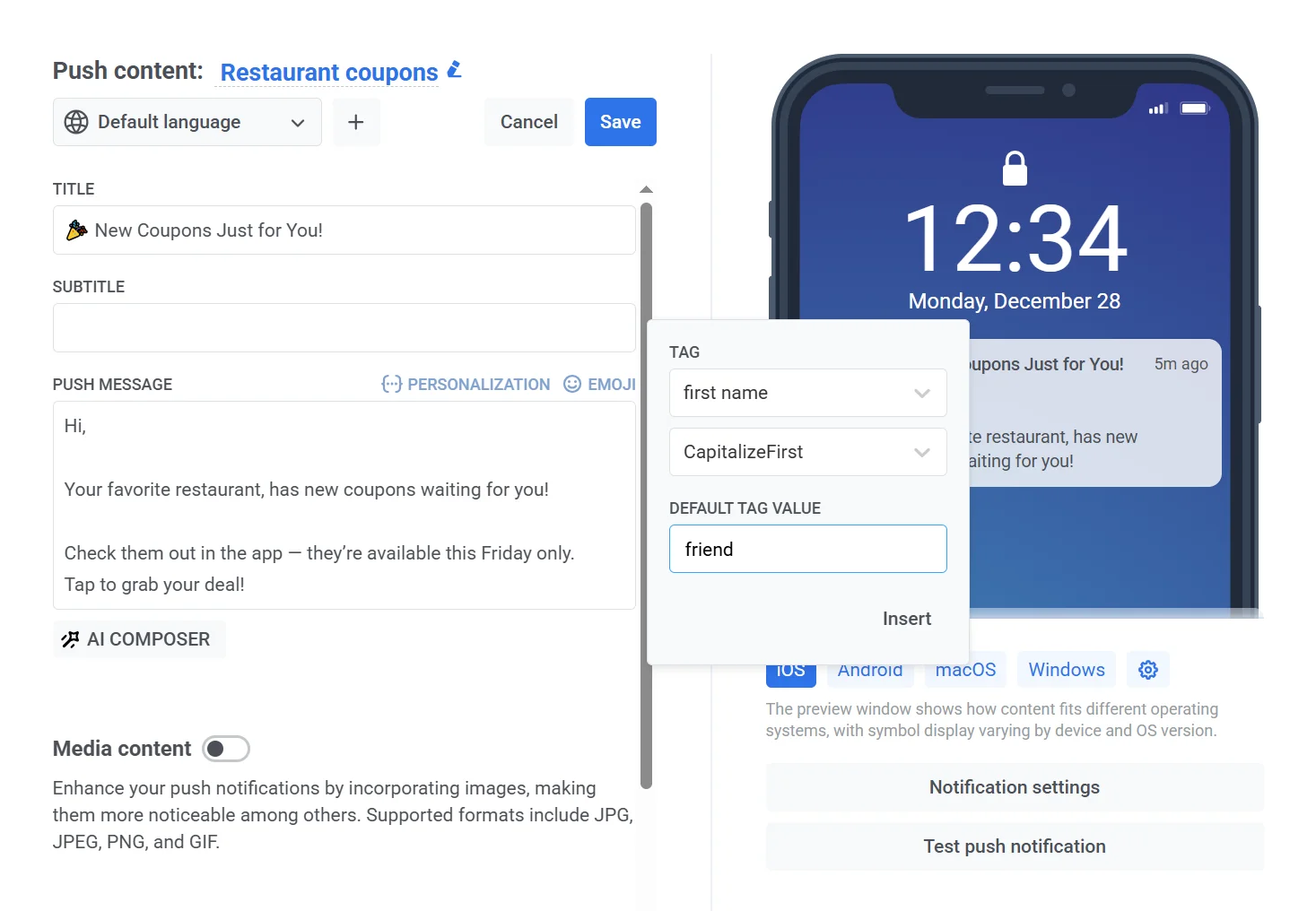
- Finally, click Insert.
Insert User ID
Anchor link toBesides Tags, you can insert the User ID into push content. Pushwoosh resolves it for each recipient at send time, so you don’t need to store it as a Tag.
- Click Personalization on the field you want to personalize (title, message text, or other supported push content).
- In the list, select User ID. Use the search box to find it quickly.
- Choose a format modifier and, if needed, a default value (see step 3 in How to personalize a push).
- Click Insert.
Personalization guides by channel
Anchor link toIf you want to personalize messages across multiple channels, check out our detailed how-to guides for different channels: